How to Apply for Long-Term Care in Ontario: A Step-by-Step Guide
Elderado – October 18, 2026
Applying for long-term care in Ontario can feel overwhelming, especially when you’re trying to find the right care for a parent or loved one.
Where do you start? Who decides if someone qualifies? How do you choose which long-term care homes to apply to? And what happens when a bed becomes available?
The good news is that you don’t have to navigate the process alone.
Ontario Health atHome manages long-term care applications, eligibility assessments, waiting lists and admissions in Ontario. Elderado helps families research and compare long-term care homes so they can make informed decisions about where to apply.
We’ve created a simple, seven-step guide to help you understand the process, from your first phone call to moving day.
How to Apply for Long-Term Care in Ontario handout
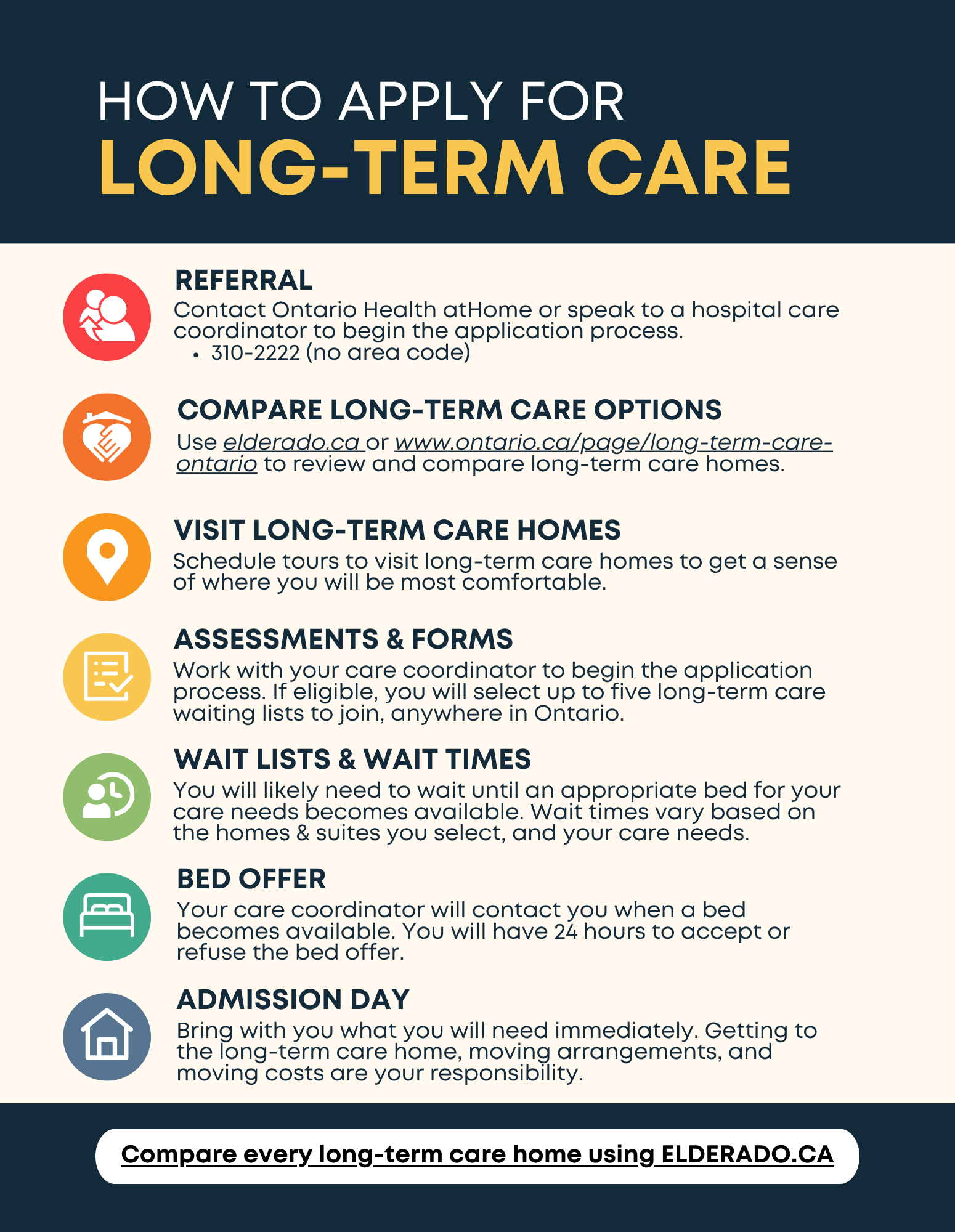
Step 1: Contact Ontario Health atHome
The first step is to contact Ontario Health atHome to begin the long-term care application process.
You can reach Ontario Health atHome by calling:
310-2222 (no area code required)
You can also call 1-833-515-1234.
You don’t need a doctor’s referral to make the initial call.
If your loved one is currently in hospital, you can speak with their hospital care team or an Ontario Health atHome care coordinator about starting the application.
A care coordinator will help you understand the process, discuss your loved one’s care needs and arrange the necessary assessments.
You can learn more at Ontario Health atHome.
Step 2: Research and Compare Long-Term Care Homes
Not all long-term care homes are the same.
Although long-term care homes in Ontario are provincially regulated, they can differ in location, accommodation, activities, amenities, atmosphere and other features.
Before selecting homes for your application, take some time to research your options.
Here are a few things worth considering:
- Location: Is the home close enough for family and friends to visit regularly?
- Accommodation: What types of rooms are available?
- Care needs: Can the home accommodate your loved one’s specific needs?
- Language and culture: Does the home offer services or programs that reflect your loved one’s preferences?
- Activities and amenities: What opportunities are available for residents to socialize and participate in activities?
- Wait times: How long might you need to wait for an appropriate bed?
You can use Elderado.ca to search, filter and compare long-term care homes across Ontario.
The Ontario government’s Long-Term Care Home Finder is another resource for researching homes.
Elderado tip: Don’t choose a long-term care home based on wait times alone. Think about whether it’s somewhere your loved one would be comfortable living and where family and friends can visit.
Step 3: Visit Long-Term Care Homes
Once you’ve narrowed down your options, schedule tours of the long-term care homes you’re considering.
A website can tell you about a home’s features, but visiting in person gives you a better sense of the environment.
During your visit, pay attention to how staff interact with residents, whether the atmosphere feels welcoming and what daily life looks like.
Ask questions about meals, activities, visiting, personal belongings and how the home supports residents with different care needs.
If possible, bring your loved one along so they can be part of the decision.
Elderado tip: Consider visiting more than one home. Touring several homes can help you identify which features and environments matter most to your loved one.
Step 4: Complete Assessments and Application Forms
Your Ontario Health atHome care coordinator will guide you through the assessments and paperwork required to determine eligibility for long-term care.
Who qualifies for long-term care in Ontario?
To be eligible for long-stay long-term care in Ontario, a person generally must:
- Be at least 18 years old.
- Be insured under Ontario’s Health Insurance Act.
- Require nursing care to be available on-site 24 hours a day, frequent assistance with daily activities, or frequent supervision or monitoring for their safety and well-being.
- Have care needs that cannot be adequately met through available publicly funded community services and other caregiving supports.
- Have care needs that can be met in a long-term care home.
For example, someone may require frequent help with bathing, dressing, eating or moving around safely. Others may need ongoing supervision because of cognitive impairment or other health conditions.
Needing help at home doesn’t automatically mean someone qualifies for long-term care. Ontario Health atHome will assess the person’s individual circumstances to determine eligibility.
Your care coordinator may also discuss other options, such as publicly funded home care and community support services.
Completing the application
Ontario Health atHome completes most of the application paperwork with you.
If your loved one is eligible, you’ll complete a choice form identifying the long-term care homes where you’d like to apply.
Most applicants can select up to five long-term care homes anywhere in Ontario, in order of preference. Different rules may apply to people in crisis or certain hospital placement situations.
Your care coordinator will explain the options and help you complete the process.
Step 5: Join the Waiting Lists
Once your loved one has been approved for placement and the selected homes have accepted the application, they’ll be placed on the appropriate waiting lists.
There isn’t one standard wait time for long-term care in Ontario.
How long someone waits depends on several factors, including:
- The homes they’ve selected
- The type of accommodation requested
- Their care needs and placement priority
- When an appropriate bed becomes available
Your Ontario Health atHome care coordinator can provide available information about waiting lists and approximate wait times. However, these are estimates, not guaranteed admission dates.
While waiting, it’s important to keep your care coordinator informed if your loved one’s health or circumstances change.
Elderado tip: Use the waiting period to prepare for a possible move. Bed offers can come with very little notice, so having important documents, personal belongings and moving arrangements organized in advance can help.
Step 6: Receive a Long-Term Care Bed Offer
When an appropriate bed becomes available in one of your selected long-term care homes, your Ontario Health atHome care coordinator will contact you.
Under the standard application process, you’ll have 24 hours to accept or refuse the bed offer.
If you accept, you’ll generally have up to five days to move into the long-term care home.
This is why it’s important to research your options carefully before selecting homes for your application.
What if the offer isn’t from your first-choice home?
You may be able to accept the offer, move into that long-term care home and remain on the waiting list for a transfer to your preferred home.
Your waiting-list priority may change after admission, and a transfer could take considerable time.
Your care coordinator can explain the rules that apply to your situation.
What happens if you refuse a bed offer?
For someone waiting at home under the standard application process, refusing a bed offer generally means their application will be closed and they’ll be removed from the waiting lists for all their selected homes.
They usually must wait 12 weeks before reapplying, unless their condition or circumstances change or another exception applies.
This can have significant consequences, so it’s important to understand the rules before making a decision.
What if your loved one is waiting in hospital?
Different placement rules can apply to hospital patients who no longer require acute hospital care and are waiting for long-term care.
Under Ontario’s modified hospital placement process, a placement coordinator may be able to select appropriate long-term care homes without the patient’s consent in certain circumstances.
If a hospital patient refuses a bed offer under this process, they can remain on the waiting lists for the homes selected by them and their placement coordinator.
However, refusing a bed offer can have other consequences, including hospital discharge decisions and potential daily charges.
If your loved one is applying from hospital, ask their placement coordinator to explain the specific rules before accepting or refusing an offer.
You can read more in the Ontario Health atHome Guide to Placement in Long-Term Care Homes.
Elderado tip: Only select homes where you would seriously consider accepting a bed. An offer can arrive unexpectedly, and you may have very little time to decide.
Step 7: Prepare for Admission Day
Once you’ve accepted a bed offer, it’s time to prepare for the move.
You’ll need to arrange transportation to the long-term care home and decide which personal belongings to bring.
Some items to consider include:
- Ontario health card and important identification
- A current medication list and relevant medical information
- Comfortable clothing and footwear
- Toiletries and personal care items
- Photographs and familiar belongings to help make the new space feel like home
Before moving day, speak with the long-term care home about what furniture and personal items are permitted, medication arrangements and what to expect during admission.
Transportation and moving arrangements are your responsibility, including any associated costs.
Accommodation charges generally begin on the scheduled admission date, even if the resident arrives later.
Moving into long-term care is a significant transition for both the resident and their family. Preparing ahead of time can help make admission day more manageable.
How Elderado Can Help You Find Long-Term Care in Ontario
Applying for long-term care involves more than completing paperwork. Families also need to decide which homes are right for their loved one.
That’s where Elderado can help.
Elderado is a free website built by caregivers, for caregivers. We understand how overwhelming elder care decisions can be, especially when you’re navigating the process for someone you love.
With Elderado, you can search, filter and compare long-term care homes across Ontario, helping you narrow down your options before scheduling tours and selecting homes for your application.
Find and compare long-term care homes on Elderado
Remember, Ontario Health atHome manages long-term care eligibility, applications, waiting lists and admissions. Elderado helps you research and compare your options so you can make more informed decisions.
You don’t have to figure everything out at once. Start by contacting Ontario Health atHome, learn about the homes available and take the process one step at a time.